Action, photography
2006 – ongoing
Since 2006, From Sea to Sea has unfolded as a durational action in which three decilitres of water are taken from one sea and poured into another. The gesture is minimal, almost absurd: what difference can a bottle of water make to an ocean? Yet in its very redundancy lies its force. The work stages what Georges Bataille calls an act of “expenditure without utility” — a transfusion that produces no measurable effect, but opens a symbolic space. Each iteration repeats the same form, yet always under different conditions: a different coast, a different horizon, a different sea. As Gilles Deleuze reminds us, repetition does not erase difference but generates it. In parallel, the action invokes the planetary hydrologic cycle, where all waters are already in circulation. To pour sea into sea is to momentarily inscribe human time into geological time, a fragile gesture set against the vast metabolism of the earth.
Ritualistic in its form, From Sea to Sea links distant bodies of water into a symbolic bloodstream. It is less an act of transport than one of connection — a metaphysical stitching of the world’s seas into a single, fluid continuum.

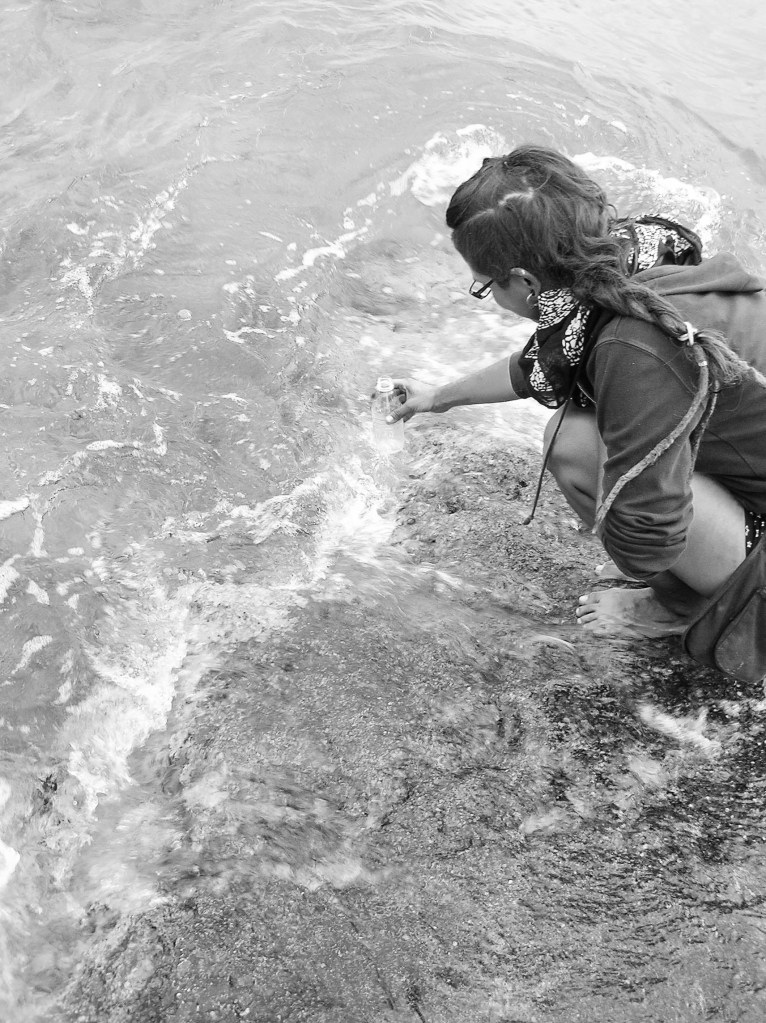
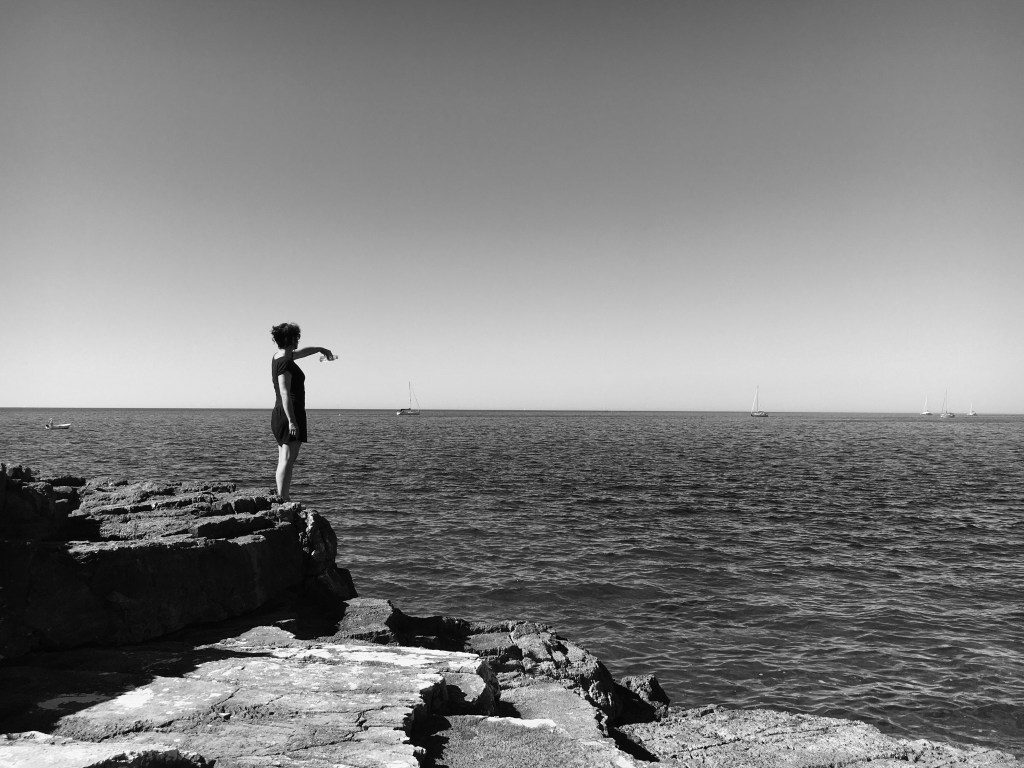

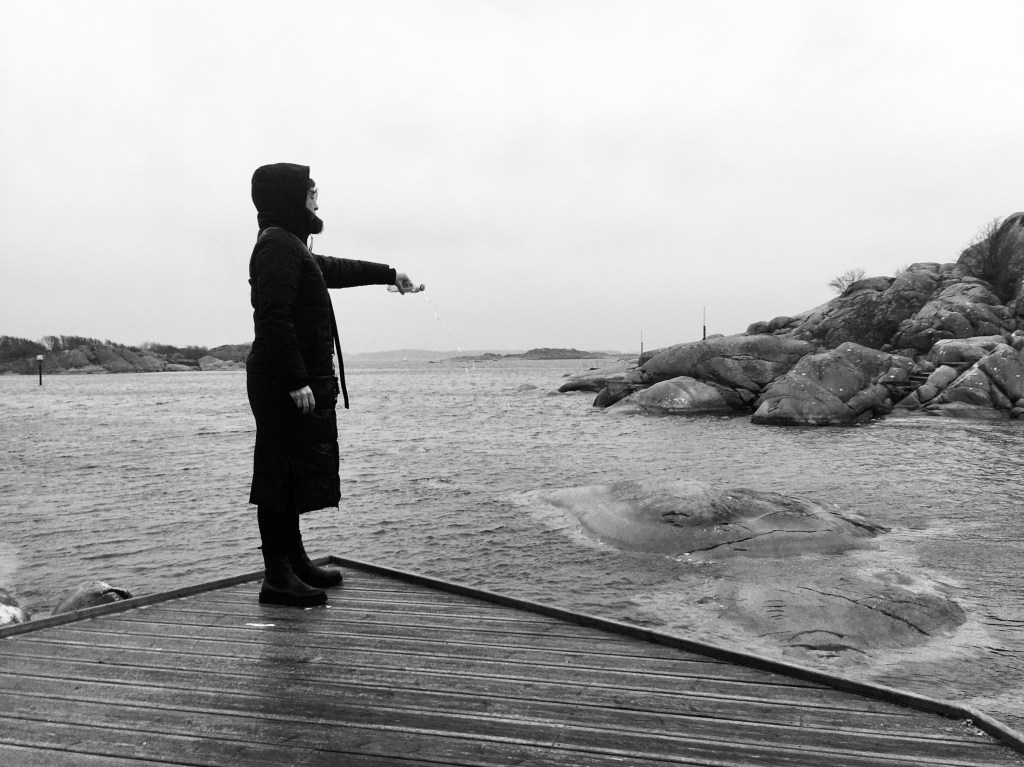
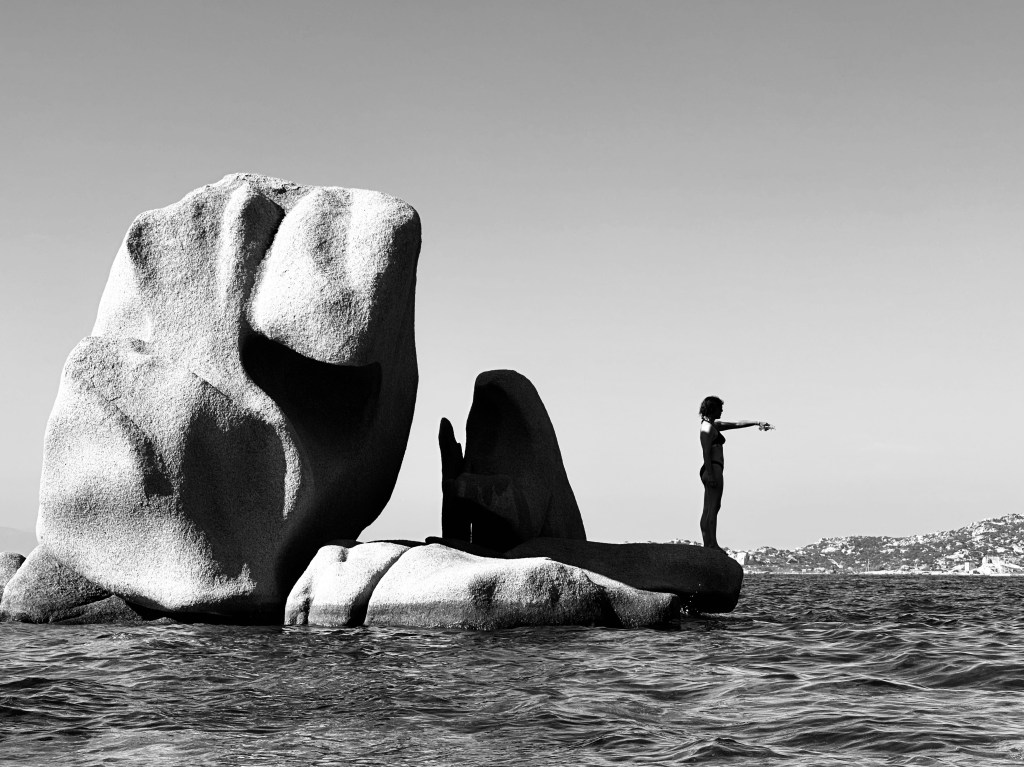
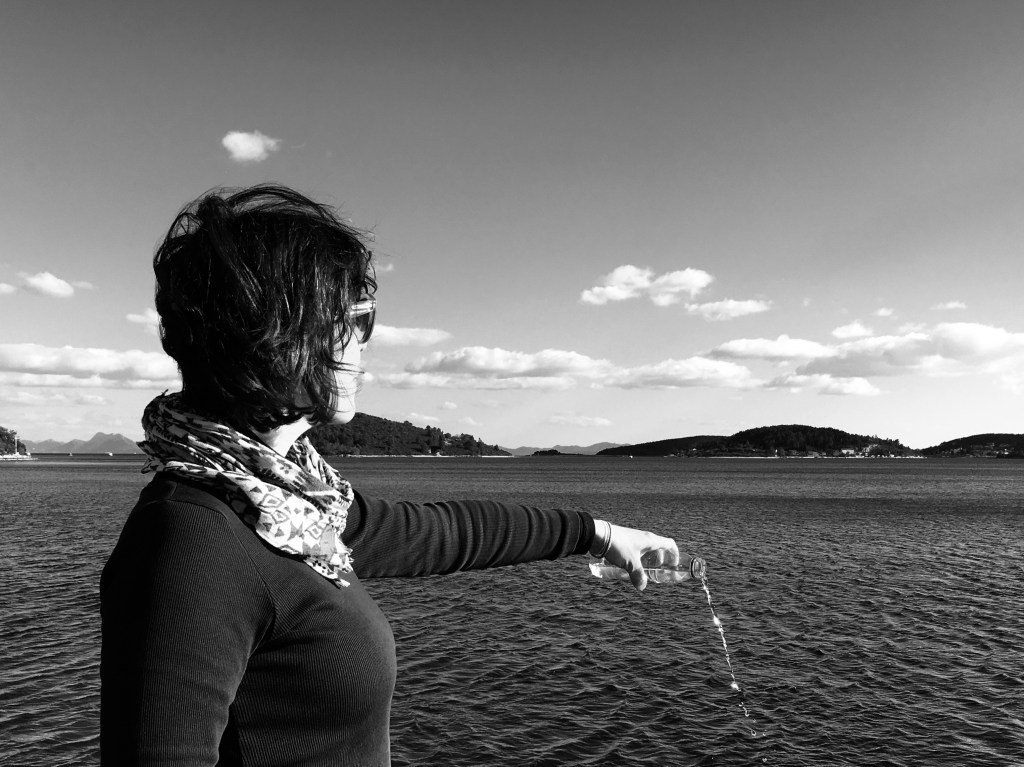
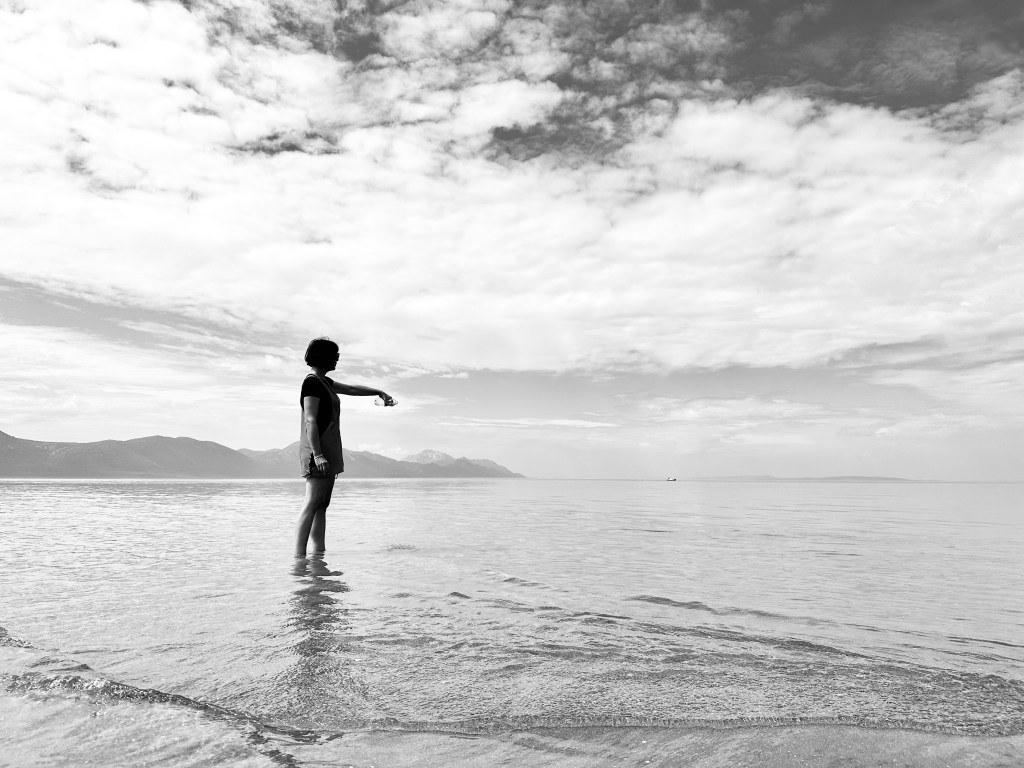
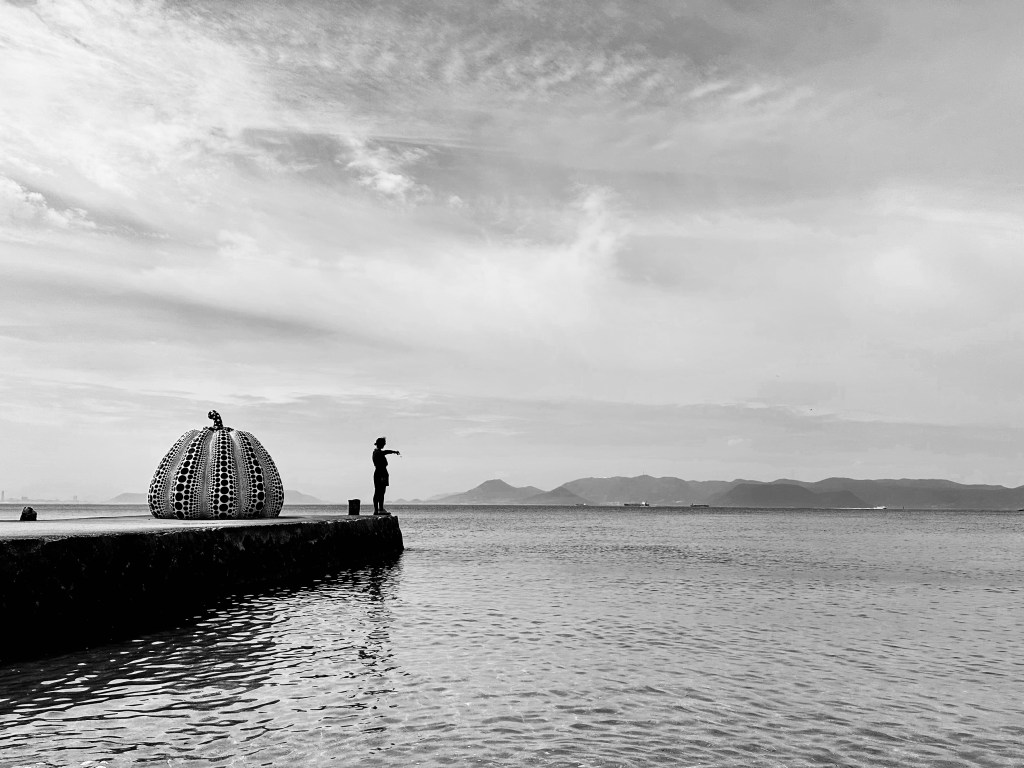
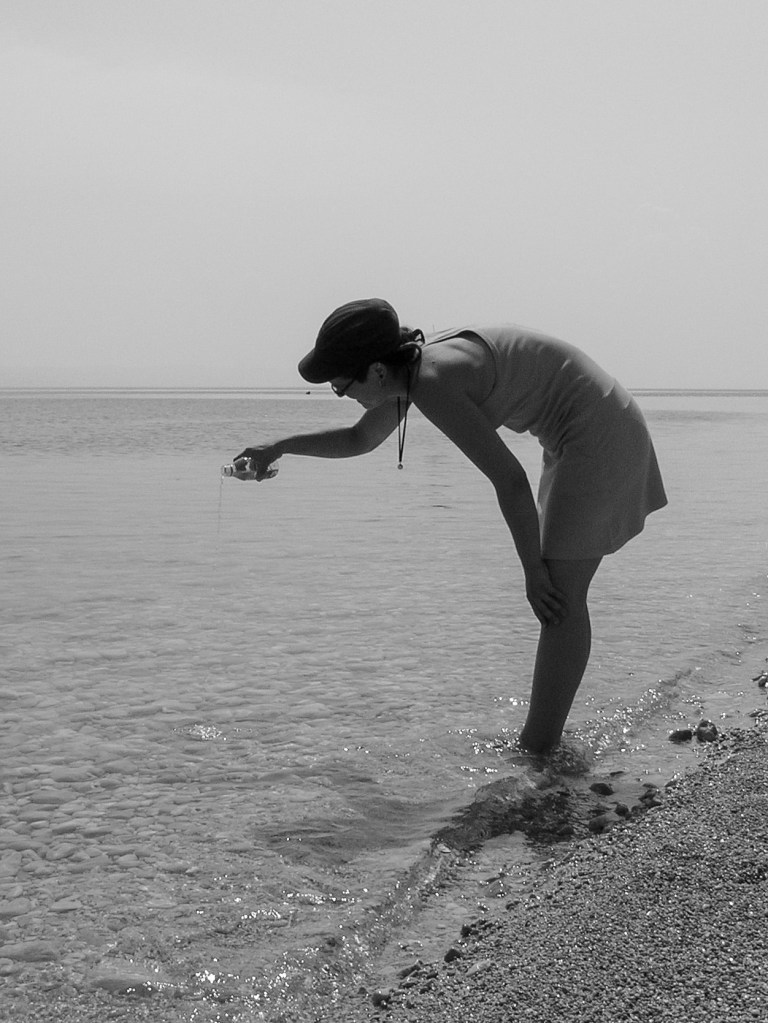
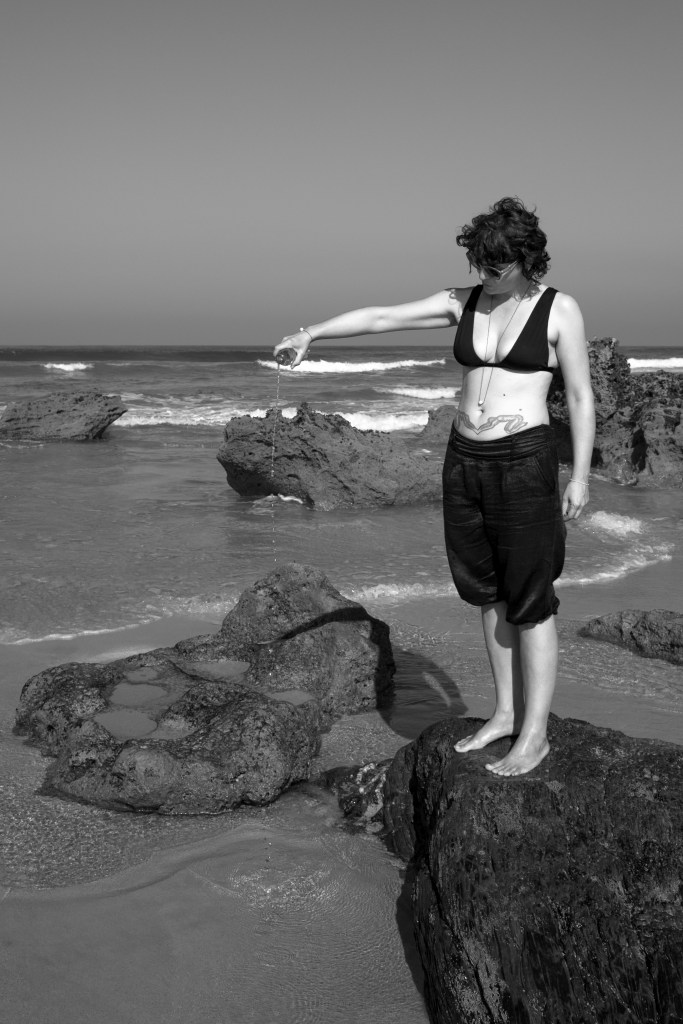
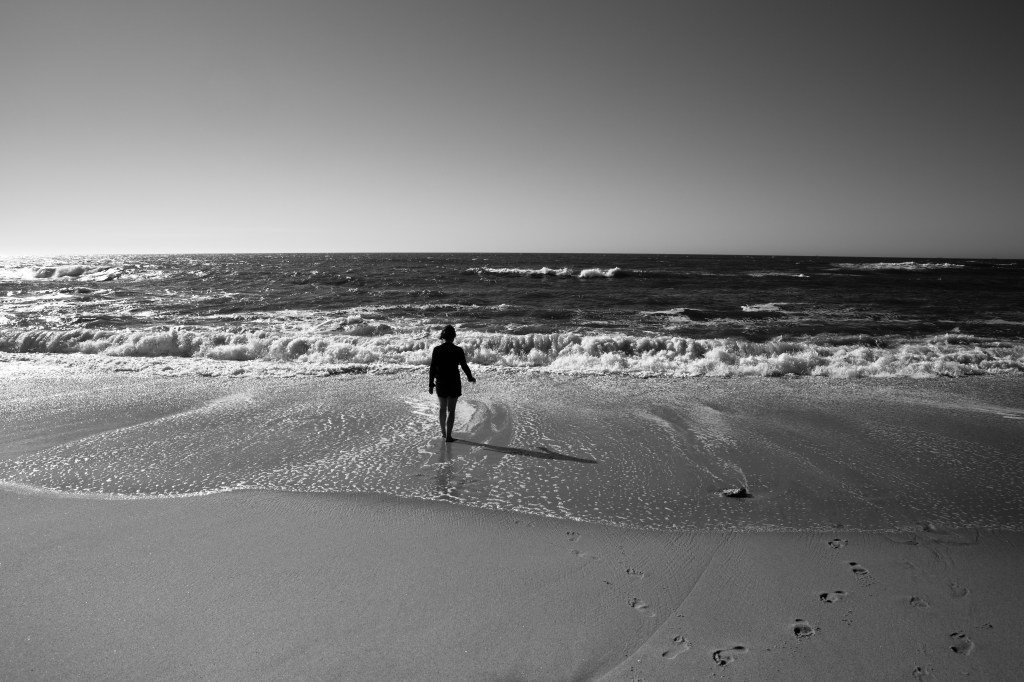
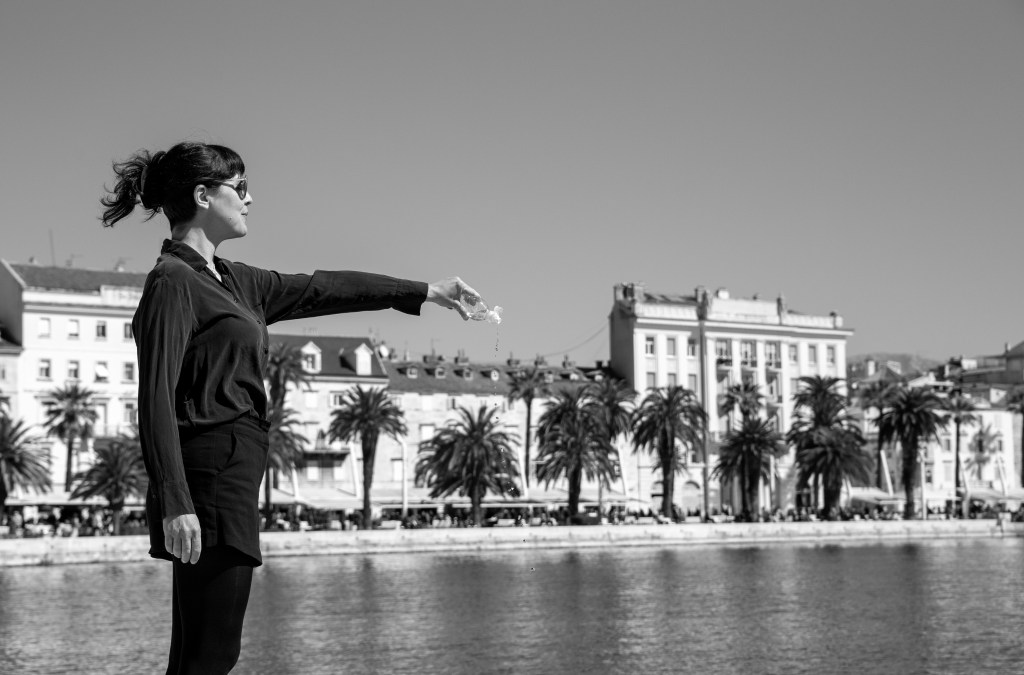
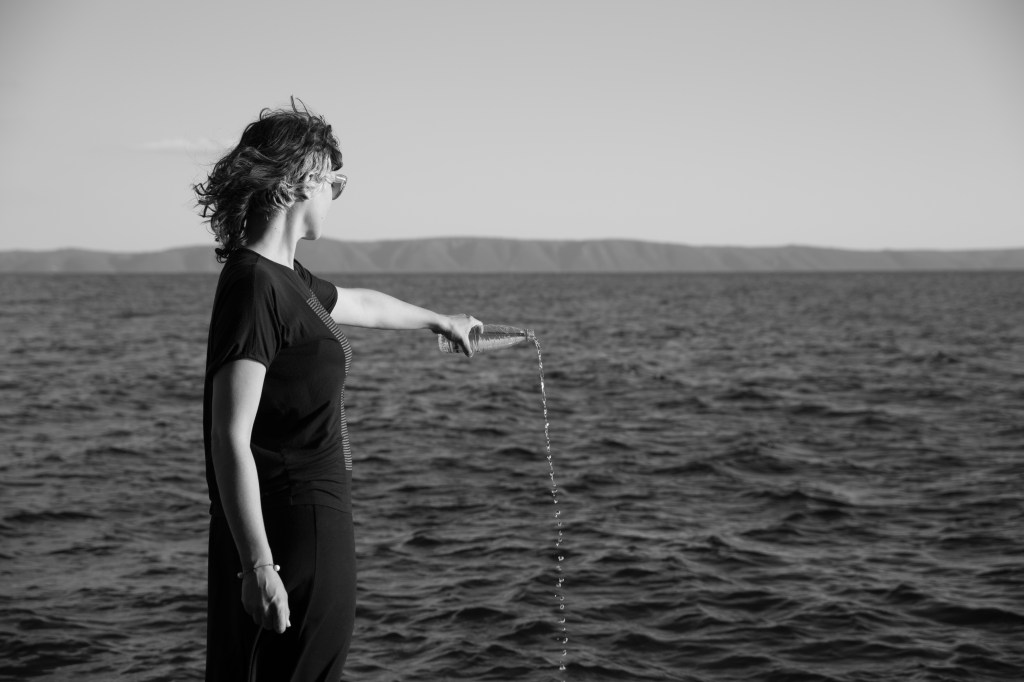

Since 2006, From Sea to Sea unfolds as a durational action: three decilitres of water are drawn from one sea and transfused into another, in a movement that traces not only a geography of coasts but also an imaginary cartography of time, circulation, and ritual. In each iteration — Alboran to Adriatic, Adriatic to North Sea, North Sea to Atlantic Ocean — the work marks a point of passage, a hinge between bodies of water that are already, in some sense, inseparably linked.
The act is deceptively simple. A bottle dips into the sea, fills with water, and is poured elsewhere, into another marine expanse. Yet the simplicity is doubled by excess. What could be more redundant than adding seawater to the sea? Georges Bataille reminds us that excess, expenditure without utility, is the very essence of sovereignty. Here, the gesture produces no measurable change in salinity, volume, or current; it is an expenditure that exposes the limits of instrumental reason. The act of “giving back” water destabilises its function as resource and reveals it as matter charged with symbolic, affective, and metaphysical intensities.
In its structure, From Sea to Sea resonates with Gilles Deleuze’s meditation on repetition and difference. Each action repeats the same form — measuring, carrying, pouring — but never under identical conditions. Each sea is different, each geography distinct, each moment marked by variations of light, temperature, history, and cultural resonance. Repetition here is not reproduction but production; it generates difference, inscribes multiplicity, and proliferates meaning.
The project also situates itself within the hydrologic cycle, the planetary circulation of water through evaporation, condensation, precipitation, and runoff. This natural cycle is total, indifferent, and continuous; no drop of water remains fixed to one sea. By intervening with a small, almost absurd transfusion, the artist folds human temporality into geological and planetary timescales. A gesture that lasts seconds resonates with cycles that stretch across millennia.
There is also a ritualistic dimension: the bottle functions as a vessel, a reliquary of sorts, transporting not only water but also memory, histories of trade, migration, conflict, and myth carried by each sea. The transfusion recalls sacramental acts — libation, baptism, the spilling of blood — while simultaneously displacing them into a secular and ecological register. The sea becomes a body, and the artist acts as mediator of its circulation, enacting a transfusion that is at once medical and poetic, technical and mystical.
The black-and-white photographs of the action further accentuate its allegorical weight. Stripped of colour, they emphasize form, gesture, and horizon, evoking a timelessness that resists documentation as mere record. Instead, the images stage the body and the sea in a relationship of care, tension, and humility. The human figure is neither heroic nor dominant but rather in service of a gesture larger than itself.
Ultimately, From Sea to Sea is a cartography of the in-between. It does not map borders but traversals; it does not monumentalize the sea as a static expanse but activates it as a living circulation. By repeating a minimal action across multiple sites, the work reveals that the sea is always both the same and different, singular and multiple. It teaches us that to give water to water is not absurd but necessary, for it is in the redundancy of the gesture that a metaphysical space emerges — a space where art, ecology, and ritual converge.
 L I N A R I C A